
Sectors · Coffee
Coffee packaging: the aroma stays inside.
Oxygen, light and moisture quickly rob coffee of its aroma. The packaging decides how long it lasts.
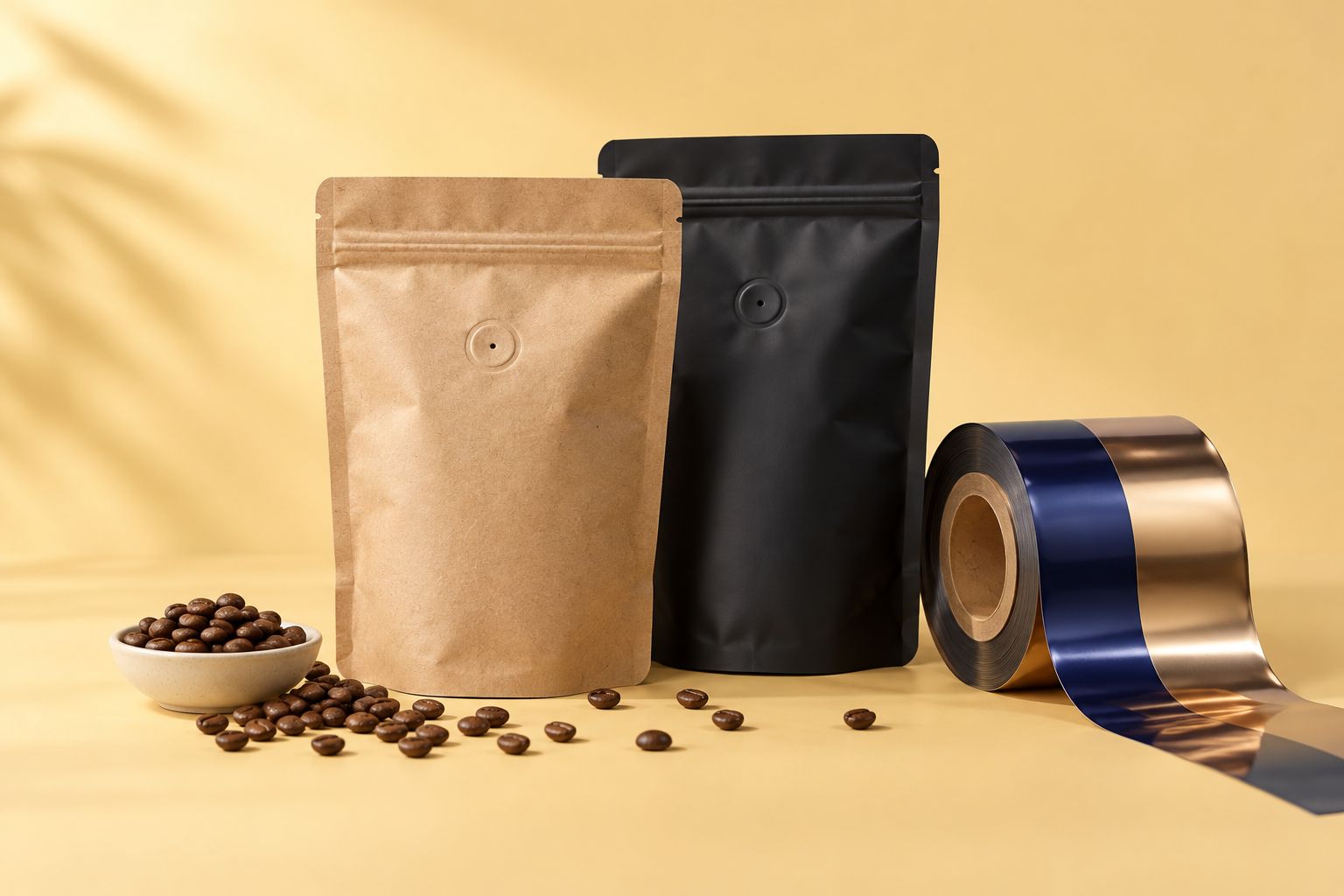
What the pack must do
- Oxygen barrier: slows the oxidation of oils and aromas.
- Barrier to light and water vapour.
- Retain the coffee aromas and keep out external odours.
- Manage the CO2 from freshly roasted coffee: the degassing valve lets it out without letting air in.
Formats
- Beans and ground coffee: bags with valve, from film on reels or pre-made.
- Capsules and pods: barrier films for lids, wrappers and multipacks.
- Single-serve and gift packs, also with a folding carton.
Materials
Typical structures use aluminium or metallised films for high barrier; mono-material structures with specific barriers are used where recyclability is a priority. The choice is based on the required shelf life and the machine, with dedicated trials.
Who makes it: Poplast Group
Frequently asked questions
Why is a valve needed?
Freshly roasted coffee releases carbon dioxide: without a valve the bag swells. The one-way valve lets the gas out and does not let oxygen in.
Can coffee be packed in mono-material?
There are high-barrier mono-material structures designed for coffee. They must be tested on the product and against the required shelf life before replacing a structure with aluminium.